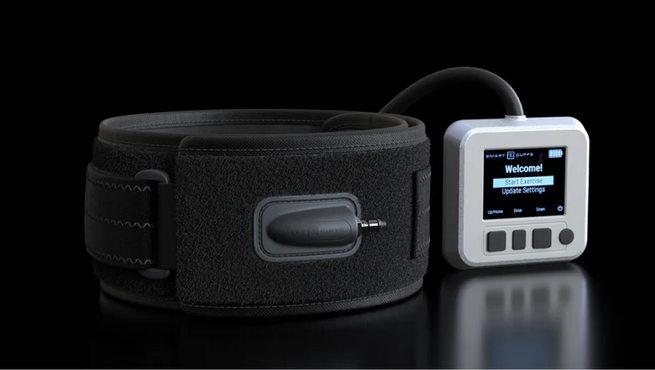



Yes, BFR training works. Two decades of peer-reviewed research show that blood flow restriction training using loads as light as 20% to 30% of 1RM produces muscle growth comparable to traditional heavy resistance training, with meaningful strength gains and accelerated recovery in clinical settings. It is now standard in physical therapy clinics, post-surgical rehab programs, and with aging athletes who cannot safely tolerate heavy loads.
Last updated: June 2026. Reflects findings from over 200 randomized controlled trials and the 2019 international BFR consensus statement.
But "does it work" deserves a real answer, not just a yes. If you've spent any time on Reddit fitness threads, strength forums, or even chatting with people at the gym, you've probably heard the question framed with skepticism, and that skepticism isn't unwarranted. So let's break down what the research actually shows, where the doubts come from, and who BFR works best for.
Why People Are Skeptical About BFR
Despite growing popularity in clinical settings and elite sports, BFR training still gets plenty of side-eye, especially in online communities like Reddit or strength-based subreddits. And honestly? That skepticism isn’t unwarranted.
When you tell a seasoned lifter that they can build muscle by curling 15-pound dumbbells with bands wrapped around their arms, their first reaction is usually something like:
- “That just sounds like a glorified pump session.”
- “There’s no way light weights can replace real lifting.”
- “If it actually worked, everyone would be doing it.”
This skepticism often stems from a few concerns:
1. It Looks and Feels Too Easy
Traditional strength training is built on the idea that heavy weights = more muscle. So when someone sees a person training with tiny dumbbells while strapped into BFR cuffs, it can come off as gimmicky.
2. The Market Is Flooded With Cheap Gear
Unfortunately, the rise of BFR’s popularity has led to an influx of low-quality occlusion bands and DIY methods that lack safety features, pressure control, or scientific backing. These knock-offs often fail to deliver actual results, and they leave users thinking BFR just doesn't work.
3. There's Misinformation and Hype
Some influencers market BFR as a magic bullet for gains without explaining the science behind it. This kind of overhyped messaging only feeds doubt, especially among evidence-minded lifters and coaches.
4. It’s Still New to Many
While BFR has been studied for over two decades, it's only recently gained traction in mainstream fitness. That lag between scientific support and public adoption leads to a lot of “wait, what is this again?” confusion.
But here’s the key: just because something sounds unconventional doesn’t mean it’s ineffective.
The skepticism surrounding BFR is exactly why it’s worth looking at the actual evidence, because beneath the surface-level doubts is a mountain of clinical research, professional application, and real-world success stories.
BFR Training at a Glance
|
BFR Outcome |
What the research shows |
Training period |
Source |
|---|---|---|---|
|
Muscle size with low-load BFR |
Comparable to traditional high-load training |
6 to 12 weeks |
Lixandrão et al., 2018 (Sports Medicine, PMID 29043659) |
|
Strength gains from low-load BFR |
Significantly greater than low-load training alone |
6 to 16 weeks |
Hughes et al., 2017 (Br J Sports Med, PMID 28259850) |
|
Hypertrophy and strength in older adults |
Safe and effective for adults over 60 |
8 to 12 weeks |
Centner et al., 2019 (Sports Medicine, PMID 30460872) |
|
Methodological standard |
LOP-calibrated pneumatic cuffs |
n/a |
Patterson et al., 2019 international consensus (Frontiers in Physiology, PMID 31156448) |
|
Hormonal response (growth hormone) |
Up to 290x baseline at 20% 1RM |
acute, single session |
Takarada et al., 2000 (J Appl Physiol, PMID 10846023) |
What the Research Says: Does BFR Actually Work?
If you're skeptical about whether BFR training works, you're not alone. But the research over the past two decades gives us a clear answer: yes, BFR training is effective, when done correctly.
What makes this especially interesting is that BFR achieves muscle growth and strength gains using loads as low as 20–30% of your one-rep max (1RM). That means lifters, rehab patients, and aging adults can experience significant improvements without lifting heavy weights.
Let’s take a closer look at what the science says.
Muscle Hypertrophy at Low Loads
A meta-analysis published in the Journal of Strength and Conditioning Research (Loenneke et al., 2012 ) examined multiple studies and found that BFR training with low loads produced similar increases in muscle size as traditional heavy resistance training.
Key takeaway: You don’t need to lift heavy to grow muscle, when blood flow is partially restricted, the body compensates by recruiting more fast-twitch fibers earlier in the set, creating a hypertrophic stimulus.
Strength Gains Comparable to Traditional Training
While BFR is most commonly associated with hypertrophy, studies also show that it contributes to increases in strength, even when performed with light loads.
In a systematic review by Hughes et al. (2017), researchers concluded that low-load BFR resistance training significantly increased both strength and muscle size, particularly when compared to low-load training without BFR.
Effective in Clinical and Rehab Settings
BFR has become a game-changer in physical therapy, especially for patients recovering from surgeries like ACL reconstruction or rotator cuff repairs.
A 2026 randomized controlled trial published in Translational Sports Medicine (PMID 42005904) tested BFR added to rotator cuff repair rehabilitation and found patients experienced exercise-induced hypoalgesia (reduced pain following exercise) compared to standard care, while still progressing through their rehab protocol. A 2026 systematic review and meta-analysis of BFR in chronic ankle conditions (PMID 42069563, BMC Musculoskeletal Disorders) reached similar conclusions about BFR's role in lower-limb rehabilitation, and the American Academy of Orthopaedic Surgeons references BFR in several rehabilitation guidelines for surgeries like ACL reconstruction and knee replacement.
This is why more and more rehab professionals now integrate SmartCuffs into early-stage recovery programs. With automatic LOP calibration, clinicians can prescribe personalized pressure for patients whose limb circumference and tissue tolerance vary widely, which a wrap-style elastic band cannot do.
Multiple Physiological Mechanisms Support Effectiveness
So, why does BFR work? Here’s what’s happening beneath the surface:
- Metabolic stress: Occlusion causes lactic acid buildup, which triggers muscle growth.
- Fiber recruitment: The fatigue from occlusion forces the body to recruit fast-twitch fibers faster.
- Hormonal response: BFR boosts natural growth hormone (GH) and IGF-1 levels post-training.
- Cellular swelling: Muscles retain more fluid under occlusion, signaling hypertrophy pathways.
These aren’t “woo-woo” effects, they’re well-documented physiological responses that happen every time BFR is applied properly.
Bottom line? The science doesn’t just say BFR works, it shows how and why it works. From muscle growth to strength development, from injury rehab to performance enhancement, the research consistently supports the effectiveness of properly executed blood flow restriction training.
What the Latest Research Says (2025 to 2026)
The case for BFR has only strengthened in the past 12 months. Several developments are worth noting for anyone evaluating the modality today:
- Pressure standardization has matured. The 2019 international consensus statement (Patterson et al., PMID 31156448, Frontiers in Physiology) established Limb Occlusion Pressure (LOP) as the gold standard for prescribing BFR pressure. Newer 2025 work in Physical Therapy in Sport directly compared high-pressure to low-pressure BFR protocols (PMID 42054976), continuing to refine which LOP percentage works best for which population. Pneumatic, LOP-calibrated cuffs remain the default in clinical research.
- ACSM 2026 Position Stand on Resistance Training. The American College of Sports Medicine published an updated Position Stand in April 2026 (PMID 41843416, Medicine and Science in Sports and Exercise) covering resistance training prescription for hypertrophy, strength, and muscle function. This is the highest-authority current reference for resistance training programming in the U.S.
- Post-surgical rehab keeps accumulating evidence. A 2026 randomized controlled trial in Translational Sports Medicine (PMID 42005904) examined BFR added to rotator cuff repair rehabilitation and reported exercise-induced hypoalgesia (reduced post-exercise pain) compared to standard care. A 2026 systematic review and meta-analysis on BFR in chronic ankle conditions (PMID 42069563, BMC Musculoskeletal Disorders) further expands the rehab evidence base.
- Cardiopulmonary outcomes. A 2025 systematic review on BFR's effects on cardiopulmonary function and body composition (PMID 41766807, Journal of Human Kinetics) supports adding BFR to cardiac and pulmonary rehab for patients who cannot tolerate aerobic loading.
- Older adults and sarcopenia. A 2026 trial in Frontiers in Physiology (PMID 41994051) tested a low-load multi-component BFR program in older adults, and a separate 2026 trial in BMC Geriatrics (PMID 41981492) studied BFR resistance training combined with swallowing therapy for sarcopenic dysphagia in older patients. Both extend the older-adult evidence base from the 2019 Centner et al. meta-analysis (PMID 30460872) into specific clinical contexts.
- Athlete safety. A 2026 review in Seminars in Thrombosis and Hemostasis (PMID 42049170) examined BFR use in athletes through the lens of endothelial function and thromboembolism risk, and proposed tailored safety protocols for competitive populations. This is the kind of paper a sports medicine physician would want to cite when adopting BFR for high-volume athletes.
The evidence base now spans more than 200 randomized controlled trials across populations from elite athletes to post-surgical patients in their seventies.
Why SmartCuffs Make BFR Safer (and Better)
If you’re going to restrict blood flow on purpose, you want to be precise about it. That’s why the equipment you use matters just as much as how you use it.
While there are plenty of knockoff cuffs and elastic bands out there promising similar results, they simply can’t deliver the same level of safety, accuracy, or user control as a professionally engineered system.
Here’s why SmartCuffs 4.0 from Smart Tools are the gold standard in BFR training:

Real-World Effectiveness: When and For Whom It Works
It’s one thing for a training method to work in a controlled lab setting. It’s another for it to stand up to the demands of real life—rehab clinics, pro sports teams, aging clients, and busy gym-goers. Blood Flow Restriction training does both.
BFR training has quietly become a go-to strategy for physical therapists, strength coaches, and performance specialists, especially when traditional high-load lifting isn’t ideal or even possible.
Let’s look at some key real-world scenarios where BFR training proves its effectiveness.
Post-Surgical Rehabilitation
BFR is now standard in many physical therapy clinics, particularly for ACL reconstructions, rotator cuff repairs, and knee replacements. Why? Because patients often can't tolerate heavy loads for weeks or months after surgery. Yet, they need to prevent muscle atrophy and start regaining strength early.
With BFR, therapists can begin strength-focused rehab just days or weeks after surgery using only light resistance or bodyweight, without stressing healing tissues.
Clinics using SmartCuffs benefit from automatic LOP calibration, ensuring safety and effectiveness during delicate recovery phases.
Athletes Managing Volume and Recovery
Elite athletes are under constant pressure to train hard, without overtraining. BFR provides a unique solution: it allows for hypertrophy and conditioning stimulus using low loads and short sessions, helping athletes maintain or even build muscle during:
- Deload weeks
- Injury recovery
- Travel or competition phases
Pro sports teams (NFL, MLB, NCAA) are increasingly turning to tools like SmartCuffs 4.0 to keep players progressing, even when traditional training isn’t feasible.
Older Adults Battling Sarcopenia
One of the most exciting applications of BFR is in aging populations. For seniors facing age-related muscle loss (sarcopenia) or joint pain, heavy lifting can be risky—or impossible. BFR offers a safe, research-backed alternative.
Incorporating SmartCuffs into age-inclusive training makes strength training accessible, joint-friendly, and measurable.
Time-Constrained Lifters and Busy Professionals
For people who want maximum results in minimal time, BFR offers metabolic overload in as little as 15–20 minutes. It’s ideal for:
- Training while traveling (bands + bodyweight)
- Short, effective “finisher” sets
- Supplementing traditional lifts without overtraining
Used properly, BFR isn’t just effective, it’s efficient.
Whether it’s clinical rehab, elite athletic development, or time-efficient hypertrophy, the real-world data all point to the same conclusion: Yes, BFR training works, and it works across a wide spectrum of users and goals.
Addressing the “It’s Just a Pump” Myth and Other Misconceptions
One of the most common criticisms of blood flow restriction training, especially in strength forums or Reddit threads, is the claim that BFR is “just a glorified pump” with no long-term benefit. On the surface, we get it: you’re lifting light weights, your arms are swelling like balloons, and it feels more like a bodybuilder’s warm-up than a serious strength session.
But here’s the thing, that pump isn’t the goal. It’s the signal.
Let’s break down a few popular BFR myths, and why they don’t hold up under scrutiny.
Myth #1: “BFR is just for getting a pump.”
Truth: The pump (aka muscle swelling) is a visible part of what’s happening—but it’s not the whole picture.
During BFR, the buildup of metabolites like lactate and hydrogen ions creates a hypoxic (low oxygen) environment in the muscle. This forces your body to:
- Recruit fast-twitch fibers earlier
- Increase growth hormone (GH) and IGF-1 production
- Trigger muscle protein synthesis
This is the same physiological cascade that occurs in traditional strength training, but with much lighter loads.
A study in the Journal of Applied Physiology ( Takarada et al., 2000 ) showed that GH levels post-BFR training were up to 290x higher than baseline, even with loads as low as 20% 1RM.
Myth #2: “You can’t build real strength with BFR.”
Truth: BFR isn’t just for hypertrophy, it also builds neuromuscular strength, especially when used as a supplement to traditional strength training.
While you won’t max out your squat with 30% 1RM, BFR preserves and builds strength in settings where heavy lifting isn’t possible (injury, deloads, travel, etc.). When paired with proper progression and heavier loads later, BFR-trained muscles respond even faster.
Think of BFR as a complementary tool, not a replacement. It helps keep the muscle active, strong, and primed for heavier lifts when you're ready.
Myth #3: “It’s just for rehab.”
Truth: BFR started in clinical settings, but it's now being used by everyone from Olympic lifters to NFL strength coaches. It's incredibly useful for:
- Deload weeks
- Volume accumulation
- Recovery sessions
- Bodybuilding finishers
- Conditioning circuits
And yes, it’s still a cornerstone in post-surgical rehab, but that’s because it’s safe, effective, and adaptable.
Myth #4: “It’s not legit because people on Reddit say it doesn’t work.”
Truth: Online forums are filled with personal anecdotes—and while some are helpful, many are based on improper use, cheap equipment, or unrealistic expectations. Scientific studies and clinical practices offer a much clearer picture of BFR’s real effectiveness.
At Smart Tools, we’ve seen firsthand how proper BFR training transforms recovery, boosts hypertrophy, and helps people train smarter, not harder.
The bottom line? The pump is real. But the science is even more real.
BFR is a legitimate, research-supported training method that creates structural, hormonal, and neurological adaptations, when done right, with the right tools. And that’s exactly what SmartCuffs 4.0 are designed to support.
Frequently Asked Questions About BFR Training
How long does it take to see results from BFR training?
Most studies report measurable strength and muscle size gains within 4 to 6 weeks of consistent training, with significant changes by 8 to 12 weeks. Results depend on training frequency (typically 2 to 4 sessions per week), proper LOP-calibrated pressure, and exercise selection.
Do BFR bands work for glutes?
Yes. BFR is most effective when applied to the upper portion of the limb being trained, so cuffs go around the upper thighs for glute work. Low-load hip thrusts, glute bridges, step-ups, and Bulgarian split squats performed under BFR drive hypertrophy in the glutes through the same metabolic-stress and fast-twitch recruitment pathways that power upper-body BFR results. Beginners should start with shorter sets and lower pressure, and progress as tolerance builds.
How tight should BFR bands be?
Pressure should be calibrated to your individual Limb Occlusion Pressure (LOP), typically 50 to 80 percent of LOP for the legs and 40% to 50% of LOP for the arms. This is why pneumatic cuffs that measure LOP automatically (like SmartCuffs 4.0) are the standard in clinical research. Wrap-style elastic bands cannot deliver consistent or measurable pressure and are not recommended for serious training or rehab.
How often can you use BFR bands?
Two to four BFR sessions per week per muscle group is the most common research-backed protocol. Daily BFR is generally not recommended unless prescribed by a clinician, since the cumulative metabolic stress can interfere with recovery.
What weight should you use with BFR bands?
Most BFR protocols use loads between 20% and 30% of your 1 RM. Heavier loads reduce the metabolic stress that drives BFR's hypertrophy and strength results. The point of BFR is to do less and still adapt, not to lift the heaviest weight you can with bands on.
Can beginners use BFR bands?
Yes, with proper guidance. Beginners benefit from the lighter loads, but should start with shorter sets, lower pressure, and supervision from a qualified trainer or physical therapist for the first few sessions. SmartTools offers a Level 1 BFR certification course for trainers and clinicians who want to teach BFR safely.
Do you need a prescription for BFR cuffs?
No. BFR cuffs like SmartCuffs are FDA-listed Class 1 devices and available without a prescription for personal training and clinical rehab use. Many physical therapy clinics, however, prescribe BFR as part of structured rehab programs, and clinical providers often deliver the best results.
What's the difference between BFR cuffs and BFR bands?
Pneumatic BFR cuffs (like SmartCuffs 4.0) measure Limb Occlusion Pressure and inflate to a precise, calibrated pressure that you can repeat session after session. Elastic BFR bands rely on tightness from manual wrapping, which cannot be measured or reproduced reliably. Nearly every published BFR study uses pneumatic cuffs for this reason. If you're going to restrict blood flow on purpose, you want to be precise about it.


