


Knee Pain Rehab at Home: PT-Approved Exercises
|
|
Time to read 8 min
|
|
Time to read 8 min
If you’re dealing with knee pain, you’re not alone. Whether it’s from a recent injury, post-surgical recovery, or a chronic condition like arthritis, knee pain is one of the most common issues seen in physical therapy, and one of the most disruptive to everyday life.
Unfortunately, not everyone has immediate access to in-person physical therapy. Time constraints, location, or insurance limitations can leave many people wondering: "Can I rehab my knee pain at home?"
The good news? Yes, with the right guidance, home-based rehab can be safe, effective, and empowering. In fact, some of the most impactful improvements in knee function come from simple, consistent movements done daily, not just what happens in a clinic.
In this article, we’ll walk you through:
What causes knee pain and how rehab addresses it
The core principles behind at-home knee rehabilitation
PT-approved exercises you can do with minimal equipment
How tools like BFR cuffs can accelerate your recovery
When to seek professional help
Let’s break it down so you can move forward, literally and figuratively.
Before diving into exercises, it’s important to understand what’s behind your knee pain. While there are dozens of potential causes, most fall into a few key categories that we regularly treat in physical therapy:
Often called “runner’s knee,” this condition is caused by poor tracking of the kneecap (patella) over the femur. It’s usually related to hip or quad weakness, and often worsens with stairs, squats, or prolonged sitting.
The meniscus is a cartilage “shock absorber” in your knee. Tears, whether from trauma or degeneration, can lead to joint line pain, clicking, or catching. Rehab focuses on strengthening and joint control.
Post-operative or conservative care for ligament injuries involves rebuilding strength, proprioception, and mobility. These injuries require carefully progressed loading over time.
Degenerative joint changes in the knee often lead to stiffness and inflammation. Contrary to popular belief, the best treatment is not rest, but guided movement and strengthening to offload the joint.
Common in runners and cyclists, this condition stems from irritation where the iliotibial band passes over the outer knee. It’s often the result of poor hip control and muscle imbalances.
They benefit from progressive rehabilitation, strengthening, mobility, and neuromuscular control. And that can start at home.
Rehabbing at home doesn't mean going it alone. In fact, many PTs encourage at-home movement as a critical piece of the recovery process, as long as you follow a few key principles:
Knee rehab is a marathon, not a sprint. Pain during or after exercise isn’t necessarily bad, but it should be manageable. Use a 0–10 pain scale: if your pain stays below a 3–4, and settles quickly, you’re likely on the right track.
It’s better to do 8 good reps than 20 sloppy ones. Prioritize form and control, especially with exercises that require balance or stability. Use mirrors, smartphone video, or feedback from a clinician when possible.
Even 10–15 minutes a day of rehab exercises can lead to significant progress over time. Rehab is like brushing your teeth, it’s the small, consistent efforts that create lasting results.
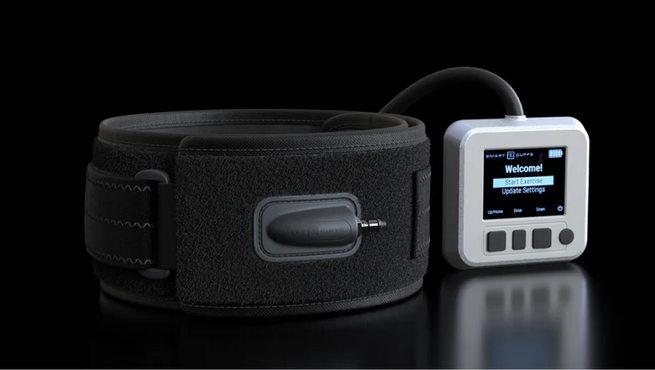
Tools like SmartCuffsBFR Cuffs from Smart Tools allow you to train muscles with light resistance, making it easier to build strength without stressing the joint, especially helpful for post-op knees or those with arthritis.
BFR (Blood Flow Restriction) training is becoming a staple in modern physical therapy for good reason: it makes progress possible when traditional loading isn’t yet tolerable.
If your symptoms worsen, or you're unsure about your technique or progress, don’t hesitate to reach out to a physical therapist. At-home rehab works best when paired with education and support.
Unlock the full potential of blood flow restriction (BFR) training with SmartCuffs® 4.0—the most advanced BFR system from Smart Tools. Whether you're an athlete, trainer, or recovering from injury, these cuffs are designed to boost muscle growth, improve endurance, and accelerate recovery.
Backed by research and built for performance, SmartCuffs® 4.0 offers wireless control, customizable pressure settings, and seamless integration with the SmartCuffs app to track your progress in real time.
Whether you’re recovering from surgery, managing arthritis, or dealing with general knee pain, movement is medicine, as long as it’s done intentionally. Below are exercises commonly prescribed by physical therapists, organized by stage of recovery and goal of treatment.
General rule: Perform 2–3 rounds of each exercise, 2–4 days per week, depending on tolerance. If any movement causes sharp or prolonged pain, skip it or consult your PT.
Focus: Light activation, swelling reduction, and gentle range of motion.
Sit with your leg extended, tighten your thigh muscle to push the knee downward.
Hold for 5–10 seconds, release.
Reps: 10–15 per side
Lie on your back and slowly slide your heel toward your buttocks, bending the knee.
Return slowly to the starting position.
Reps: 10–12
Lie on your back, brace your core, and lift one leg to 45° with the knee straight.
Control the return.
Reps: 10 per leg
While seated or lying down, pump your ankles up and down.
Helps with circulation and swelling.
Reps: 20–30
Focus: Target glutes, hamstrings, and quads with low-load strength.
Lie on your back with knees bent. Lift your hips, squeezing glutes at the top.
Lower slowly.
Reps: 10–15
Stand while holding onto a chair. Slowly bend one knee, bringing your heel toward your glutes.
Lower with control.
Reps: 10 per leg
Stand holding a counter or rail. Perform a shallow squat (no deeper than 45°).
Focus on keeping knees aligned with toes.
Reps: 8–12
Lie on your side, bottom leg bent, top leg straight. Lift the top leg 12–18 inches.
Pause briefly, lower slowly.
Reps: 10 per leg
Focus: Return to stairs, walking, balance, and advanced daily movements.
Step onto a low stair or sturdy surface, then step back down.
Alternate legs.
Reps: 10 per leg
Step one foot forward, bend both knees into a lunge. Keep your torso upright.
Use support if needed.
Reps: 8–10 per side
Place a mini band around your thighs or ankles. Slightly bend knees and step sideways.
Maintain constant band tension.
Reps: 10–15 steps each direction
Loop a resistance band behind your knee, anchor it to a fixed point.
Slightly bend and straighten your knee against the band.
Reps: 12–15
Tip: You can increase the effectiveness of many of these exercises, especially in early and mid phases, by pairing them with BFR training using SmartCuffs. Let’s dive into that next.
If traditional strength training feels too painful or your knee isn't tolerating load well, BFR (Blood Flow Restriction) training can be a game-changer, and that’s where SmartCuffs 4.0 comes in.
BFR training involves applying personalized pressure to the upper thigh to partially restrict venous blood flow while still allowing arterial blood in. When combined with low-resistance exercise, this tricks the body into responding as if it were lifting heavier weights, all while reducing joint stress.
Build muscle strength using light weights or just body weight
Protect healing tissues (especially post-op or inflamed knees)
Stimulate recovery by improving blood flow and growth factors
Increase training tolerance for individuals who can’t lift heavy yet
Calibrated pressure settings for maximum safety
App-guided protocols for at-home rehab users
Comfortable, durable cuffs designed for clinical and home use
Trusted by PTs and pro athletes across the country
With SmartCuffs by Smart Tools, patients and rehab professionals can confidently integrate BFR into at-home knee rehab without sacrificing safety or effectiveness.
Explore SmartCuffs 4.0 BFR Cuffs
At-home rehab can do a lot but it’s not a one-size-fits-all solution. Here’s when you should consult a PT or medical professional:
Sudden swelling or bruising that doesn’t resolve
Sharp, localized pain during or after exercise
Joint locking, instability, or “giving way”
Post-surgical protocols that require structured progression
No improvement after 3–4 weeks of consistent rehab
Your knee is a complex joint. Getting a tailored plan from a licensed PT can ensure you’re progressing safely and efficiently. Even just one or two visits can make your home program far more effective.
If there’s one takeaway from this article, it’s this: you don’t have to wait for the “perfect” setup to start rehabbing your knee. Recovery doesn’t only happen in a clinic, it happens consistently, in small steps, and often right at home.
At-home knee rehab is not about doing more, but doing what’s right, for your body, your pain level, and your stage of healing. With the right knowledge, intentional movement, and tools like SmartCuffs, you can safely improve strength, restore function, and reduce pain.
Remember:
Motion (done correctly) helps heal
Strength is the long-term solution to joint pain
Progress may be slow, but it’s still progress
Whether you’re recovering from injury, managing arthritis, or simply looking to regain confidence in your movement, your rehab journey can start today, right in your living room.
Some of the most effective exercises include:
Quad sets
Glute bridges
Mini squats
Step-ups
Straight leg raises
These help restore mobility and strength in key muscle groups that support the knee joint.
In many cases, yes, especially for mild or moderate knee pain. With proper education, a structured program, and tools like BFR cuffs, at-home knee rehab can be very effective. However, it's always smart to consult a physical therapist for a personalized plan.
Most people benefit from doing rehab exercises 3–5 times per week, depending on the phase of recovery. Consistency matters more than intensity, it’s better to do a little daily than to overdo it once a week.
Yes, when done properly using a safe, calibrated system like SmartCuffs. BFR allows patients to build strength with low loads, which is especially useful after surgery or during flare-ups when heavy loading isn’t possible.
At minimum:
A resistance band
A sturdy chair or step
A yoga mat or firm surface
For advanced rehab, BFR cuffs like SmartCuffs can significantly improve outcomes with minimal joint stress.
You should continue doing rehab exercises until you’ve regained full strength, range of motion, and confidence in your knee. Even after symptoms improve, maintaining strength and mobility exercises can prevent future flare-ups.
Jackson H. - Masters of Exercise Physiology & Teaching Assistant at the University of North Carolina.
Jackson holds a Master’s in Exercise Physiology from UNC Chapel Hill, where he served as a teaching and research assistant. A former student-athlete with a strong foundation in performance research, data analysis, and coaching, Jackson is passionate about health and wellness


