


BFR Training for Seniors & Elderly Individuals
|
|
Time to read 9 min
|
|
Time to read 9 min
Aging brings wisdom, perspective, and life experience, but it also brings physiological changes that can make staying strong more challenging. One of the most common and impactful changes we see as people age is a gradual loss of muscle mass and strength, known clinically as sarcopenia. This process can begin as early as our 40s and tends to accelerate after age 60.
From a physical therapy and sports science standpoint, this loss of strength isn’t just about muscle size, it directly affects balance, mobility, independence, and fall risk. Everyday activities like getting out of a chair, climbing stairs, or carrying groceries can slowly become more difficult, especially when joint pain or previous injuries limit traditional exercise options.
While resistance training is one of the most effective ways to slow or reverse these changes, many older adults face real barriers:
Joint discomfort or arthritis
Fear of injury
Balance limitations
Recovery challenges from heavy lifting
This is where BFR training for seniors offers a powerful and practical solution.
Blood flow restriction (BFR) training allows older adults to gain strength using very light resistance or even bodyweight, while still stimulating the muscles in a way that resembles traditional strength training. When used appropriately, often under the guidance of a physical therapist, it can help seniors build strength, improve function, and maintain independence without placing unnecessary stress on joints or connective tissue.
Blood flow restriction training is a method that uses specialized cuffs placed around the upper arms or thighs to partially restrict blood flow leaving the muscle, while still allowing blood to flow into the limb. This controlled restriction creates a unique training environment inside the muscle.
Here’s why that matters, especially for elderly individuals.
Under normal circumstances, building muscle requires lifting moderate to heavy loads (typically 60–80% of a one-repetition maximum). For many seniors, that level of loading simply isn’t realistic or safe. BFR changes the equation.
With blood flow restriction training for seniors, the body responds to very light resistance (often 20–30% of max effort) as if it were much heavier. This happens because:
Metabolic stress increases rapidly
Muscle fibers fatigue more quickly
Growth-related signaling pathways are activated
In simple terms: You get more benefit from less effort.
From a physical therapy perspective, this makes BFR especially valuable for:
Older adults with joint pain or arthritis
Individuals recovering from surgery or injury
Seniors who are new to strength training
Patients who fatigue quickly with traditional exercise
Unlike traditional gym-based strength programs, BFR can be used with:
Seated exercises
Bodyweight movements
Light resistance bands
Short walking sessions
When applied using clinical-grade systems, pressure is individualized and monitored, making the experience more comfortable, consistent, and safe for aging populations.
The growing interest in BFR training for elderly individuals isn’t driven by fitness trends, it’s driven by outcomes. Research and clinical experience continue to show that when BFR is used correctly, older adults can experience meaningful improvements in both strength and quality of life.
Here are the key benefits we see most often in clinical and home-based settings:
Sarcopenia is one of the leading contributors to functional decline in older adults. BFR training has been shown to increase muscle size and strength, even in individuals well into their 70s and 80s, using loads that feel manageable and safe.
BFR exercises often mimic real-life movements, such as:
Sit-to-stand from a chair
Step-ups
Walking
Strength gains from BFR translate directly into improved performance with daily tasks, helping seniors stay independent longer.
Stronger legs and improved neuromuscular control contribute to better balance. Since falls are one of the leading causes of injury in older adults, this benefit alone makes blood flow restriction training for seniors a valuable preventive strategy.
Because BFR relies on low resistance, it significantly reduces stress on the knees, hips, shoulders, and spine. This is especially important for individuals with arthritis, joint replacements, or chronic pain.
Light walking with BFR has been shown to improve circulation and muscular endurance. For seniors who struggle with longer or more intense cardio sessions, this provides an accessible way to stay active.
One of the most overlooked benefits of BFR training for older people is confidence. When exercise feels achievable, and results are noticeable, adherence improves. That consistency is what ultimately drives long-term health outcomes.
Taken together, these benefits explain why BFR is increasingly being used in geriatric physical therapy, orthopedic rehab, and supervised home exercise programs across the country.
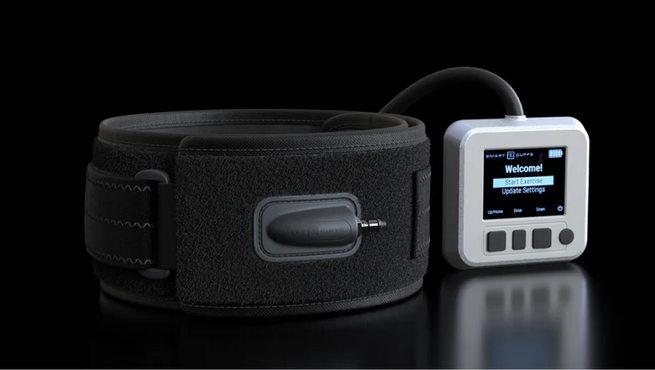
Unlock the full potential of blood flow restriction (BFR) training with SmartCuffs® 4.0—the most advanced BFR system from Smart Tools. Whether you're an athlete, trainer, or recovering from injury, these cuffs are designed to boost muscle growth, improve endurance, and accelerate recovery.
Backed by research and built for performance, SmartCuffs® 4.0 offers wireless control, customizable pressure settings, and seamless integration with the SmartCuffs app to track your progress in real time.
The first question most people (and clinicians) ask when hearing about blood flow restriction training for elderly individuals is, “Is this safe?”
The answer, backed by a growing body of research, is a reassuring yes, when done properly and under appropriate supervision.
A 2022 study analyzed BFR in older adults and concluded that low-load BFR training is both safe and effective for improving muscle strength and physical function in seniors, including those with cardiovascular conditions, joint disease, and post-operative limitations (source).
Low-load BFR (20–30% of 1RM) significantly reduces joint and tendon stress
BFR has a very low risk of adverse events when individualized pressure is used
Studies show no significant increase in blood pressure or cardiovascular risk when protocols are followed
Ideal for early rehab, including after joint replacement or fracture
More than a decade of clinical use in physical therapy supports its application in aging populations
Safety hinges on accurate pressure calibration. Using tools like SmartCuffs 4.0, which calculates each user’s limb occlusion pressure (LOP), ensures that the restriction is within a therapeutic and safe range, avoiding both under- and over-compression.
Elastic bands or makeshift cuffs lack this precision and can pose real risks, especially in populations with circulatory or cardiovascular considerations. This is why Smart Tools is trusted by clinicians nationwide who work with seniors every day.
One of the most powerful features of BFR training is its versatility. Whether integrated into a supervised physical therapy program or a safe at-home routine, BFR can be adapted to meet a wide range of needs.
Here’s how it can be applied in real-world rehab or daily use:
Use case: Build strength without heavy weights, especially useful for those with joint pain or mobility challenges.
Common exercises:
Sit-to-stand from a chair
Seated leg extensions
Standing calf raises
Bicep curls or tricep presses with light dumbbells or resistance bands
Protocol:
4 sets: 30 reps in the first set, then 15-15-15
30 seconds rest between sets
Cuff pressure: 50–60% LOP for legs, 40–50% for arms
Sessions: 2–3x per week
Use case: For seniors unable to tolerate longer cardio sessions but still needing light aerobic work.
Examples:
10–15 minutes of treadmill walking or hallway laps
Slow pedaling on a stationary bike
Supervised walking sessions during early post-op rehab
Benefits:
Improves blood flow, oxygen delivery, and muscular endurance
Enhances recovery in deconditioned or post-surgical individuals
Tip: BFR walking can be especially helpful in home health PT or during transitions from inpatient to outpatient rehab.
Use case: In individuals who cannot yet exercise actively, brief bouts of BFR occlusion (5–10 minutes, multiple times per day) have been shown to help preserve muscle mass and stimulate blood flow, even in bedbound patients or those recovering from major surgeries.
Regardless of the approach, the ease-of-use and clinical precision of SmartCuffs 4.0 make them ideal for both professionals and aging individuals using BFR at home with guidance.
When it comes to choosing the right BFR device, especially for use in older populations, safety, comfort, and simplicity are non-negotiables.
That’s exactly what Smart Tools delivers with the SmartCuffs 4.0 system, the gold standard for clinical and at-home BFR training.
Here’s why it stands out:
SmartCuffs determine limb occlusion pressure (LOP) for each user, eliminating guesswork and ensuring pressure is always within a safe and therapeutic range. This is crucial for older adults, whose circulatory and tissue tolerance may vary.
With app-based Bluetooth connectivity, users and clinicians can:
Start sessions
Manually adjust pressure
Monitor exercise duration and set counts
Follow structured protocols, all from a mobile device
This creates a seamless and empowering experience for seniors following a home program or for clinicians managing multiple patients in a rehab setting.
The cuffs are made from soft, durable materials designed to fit comfortably on a variety of limb sizes, especially important for elderly individuals with more delicate skin or reduced tissue mass.
SmartCuffs are used by:
Physical therapists in outpatient, home health, and post-acute settings
Hospitals and rehabilitation centers
Athletic trainers working with aging athletes and masters-level competitors
Smart Tools is committed to science-backed, USA-made BFR technology that delivers results for real people, not just elite athletes.
Aging doesn't have to mean slowing down and it certainly doesn't have to mean losing independence. With the right approach to exercise and rehabilitation, seniors can continue to move well, feel strong, and live confidently well into their 70s, 80s, and beyond.
BFR training for seniors represents one of the most exciting, evidence-backed breakthroughs in this space. It offers a practical, safe, and highly effective way to:
Build muscle with light resistance
Improve balance and reduce fall risk
Recover from injury or surgery more effectively
Maintain mobility and independence
Whether you're a physical therapist working with older adults or a senior looking for a safe way to stay active at home, blood flow restriction training deserves serious consideration, especially when using clinically trusted technology like SmartCuffs from Smart Tools.
Aging may be inevitable, but losing strength doesn't have to be.
Yes, when used correctly. Research shows that low-load BFR training is safe and effective for seniors, including those with joint pain or recovering from surgery. For best results and safety, BFR should be performed using clinically validated devices like SmartCuffs and ideally under professional guidance.
Benefits include:
Increased muscle strength and size
Improved balance and mobility
Lower fall risk
Faster recovery after injury or surgery
Reduced joint stress during exercise
Better circulation and cardiovascular health
Yes, especially with user-friendly systems like SmartCuffs 4.0, which feature manual pressure control and Bluetooth-guided sessions. Many physical therapy programs now include home-based BFR options for aging patients who want to maintain or regain strength safely.
Most older adults can benefit from BFR 2–3 times per week as part of a structured exercise or rehab plan. Frequency can be adjusted based on individual goals, fitness level, and physical therapy recommendations.
BFR isn’t necessarily better, but it can be more appropriate for seniors who can’t tolerate heavy lifting due to pain, arthritis, or injury. It allows for similar strength benefits with far less mechanical stress on the joints.
Jackson H. - Masters of Exercise Physiology & Teaching Assistant at the University of North Carolina.
Jackson holds a Master’s in Exercise Physiology from UNC Chapel Hill, where he served as a teaching and research assistant. A former student-athlete with a strong foundation in performance research, data analysis, and coaching, Jackson is passionate about health and wellness


