


BFR Training for Runners & Endurance Athletes
|
|
Time to read 10 min
|
|
Time to read 10 min
If you’re a runner, you already know the paradox of endurance training: the very thing that makes you better can also be what breaks you down.
High weekly mileage, repetitive loading, and minimal recovery windows place tremendous stress on the body. Over time, this often shows up as runner’s knee, Achilles pain, shin splints, plantar fasciitis, or lingering muscle weakness that traditional running alone doesn’t fix. From a physical therapy standpoint, this is one of the most common patterns we see in endurance athletes, strong cardiovascular systems paired with underprepared musculoskeletal tissues.
That’s where blood flow restriction (BFR) training enters the conversation.
Once reserved primarily for post-surgical rehab and strength athletes, BFR training for runners has gained serious attention in sports medicine and physical therapy circles. Why? Because it allows runners and endurance athletes to build strength, maintain muscle, and improve tissue resilience using very low mechanical loads, a critical advantage for athletes who already accumulate a high impact load from running.
For runners managing injuries, building strength during high-mileage phases, or trying to stay fit during time off from running, blood flow restriction training for runners offers a smarter, joint-friendly solution. And with modern systems like SmartCuffs by Smart Tools, BFR can be applied safely and precisely, both in the clinic and at home.
In this article, we’ll break down what BFR is, why it’s uniquely valuable for endurance athletes, and how runners can integrate it into training and physical therapy programs without compromising their miles.
At its core, blood flow restriction training is a method that partially restricts blood flow leaving a working muscle while still allowing blood to enter. This is done using specialized cuffs placed high on the arm or thigh and inflated to a personalized pressure based on the athlete’s limb and circulation.
For runners, here’s the key takeaway:
BFR creates the physiological benefits of hard strength training, without heavy weights or high joint stress.
When blood flow out of the muscle is restricted, several important things happen:
Metabolic stress increases quickly, even with light loads
The body recruits fast-twitch muscle fibers earlier than usual
Growth-promoting signals like growth hormone and IGF-1 increase
Muscles adapt as if they were trained at much higher intensities
This means a runner can perform exercises like the ones listed below and still stimulate meaningful strength and muscular adaptations:
Bodyweight squats
Lunges
Step-ups
Calf raises
Even walking or cycling
From a physical therapy perspective, this is incredibly valuable. Runners often need strength work but can’t tolerate heavy lifting due to pain, injury, or fatigue from running volume. BFR training for endurance athletes bridges that gap, allowing strength and rehab work to continue without adding unnecessary stress to joints, tendons, or healing tissues.
It’s important to note that not all BFR is created equal. Elastic bands or makeshift tourniquets lack precision and can be unsafe. Clinically validated systems like SmartCuffs determine limb occlusion pressure (LOP) and allow for consistent, safe pressure throughout the session, which is why they’re trusted by physical therapists and sports medicine professionals working with runners.
In short: BFR doesn’t replace running, it supports it. It helps runners build stronger legs, tolerate training better, and stay healthier across long seasons and long careers.
If you’re serious about running performance or longevity in the sport, blood flow restriction training might be one of the most underutilized tools in your training or rehab plan.
Here's why it matters and how it directly benefits runners, marathoners, and endurance athletes:
One of the biggest gaps in many runners’ programs is lower-body strength. But let’s be honest, few endurance athletes want to spend time under a barbell squatting 80% of their 1RM.
With BFR training, you can use as little as 20–30% of your max load (or even just body weight) and still stimulate muscle growth and neuromuscular adaptations. This makes it ideal for runners who need strength but want to avoid excess fatigue, joint stress, or soreness that might interfere with mileage.
Injury, deloads, or taper phases often lead to muscle loss, especially in the quadriceps, hamstrings, and calves. Using blood flow restriction training for runners allows you to stimulate those same muscle fibers and hormonal responses with minimal strain, helping preserve muscle mass and performance readiness.
A stronger runner is a more efficient runner. Research suggests that increasing lower-limb strength and muscle recruitment patterns can improve running economy, especially in long-distance events. BFR is a low-impact way to support that strength development, especially for those logging high weekly mileage or recovering from prior injury.
Let’s face it: runners are masters of repetitive motion. But that comes at a cost, with common issues like runner’s knee (PFP), IT band syndrome, Achilles tendinopathy, and shin splints often rooted in poor tissue resilience or strength imbalances.
By incorporating BFR strength or aerobic sessions into your weekly plan, you can stimulate critical muscle groups (quads, hamstrings, calves, glutes) without the high loading forces that contribute to overuse.
Low-load walking or light cycling with BFR can increase local blood flow, stimulate muscular adaptation, and promote recovery all without breaking down the body. This makes BFR ideal for active recovery days, rest weeks, or during return-to-run transitions.
Bottom line: Whether you’re training for your first half marathon or shaving minutes off your next Boston qualifier, BFR offers runners a way to train smarter, recover stronger, and stay in the game longer.
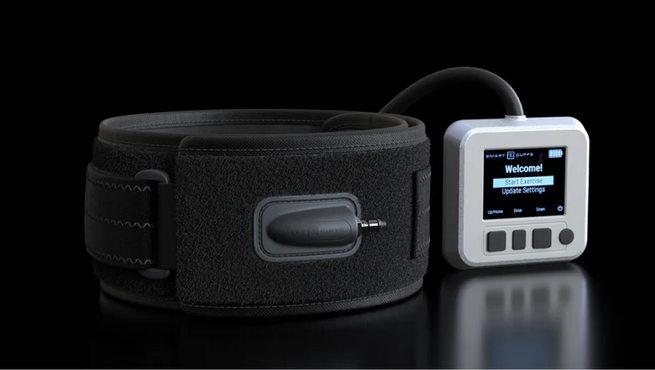
Unlock the full potential of blood flow restriction (BFR) training with SmartCuffs® 4.0—the most advanced BFR system from Smart Tools. Whether you're an athlete, trainer, or recovering from injury, these cuffs are designed to boost muscle growth, improve endurance, and accelerate recovery.
Backed by research and built for performance, SmartCuffs® 4.0 offers wireless control, customizable pressure settings, and seamless integration with the SmartCuffs app to track your progress in real time.
While BFR training has long been studied in strength and rehab settings, we’re now seeing an exciting rise in evidence supporting its use for endurance athletes, including runners, cyclists, and triathletes.
Let’s highlight some of the key takeaways:
A recent 2022 study published in Scientific Reports (Nature) found that low-load cycling with BFR significantly improved oxygen uptake (VO₂max), lactate threshold, and muscular endurance compared to non-BFR training with less mechanical stress on the body.
For runners, this suggests that BFR can support aerobic development without requiring endless hours of pounding the pavement, ideal for cross-training or injury prevention blocks.
The same research also noted enhancements in capillary density and mitochondrial enzyme activity, both of which are vital for oxygen transport and endurance performance. This aligns with anecdotal reports from coaches who use BFR cycling to maintain or even improve cardio fitness during injury downtimes.
Multiple studies have demonstrated that BFR helps maintain muscle size and strength during periods of immobilization or low activity, making it a trusted tool for runners recovering from surgery, stress fractures, or overuse injuries.
This is why many sports medicine clinics and performance centers use BFR cuffs in ACL, Achilles, or stress fracture rehab, often weeks before athletes are cleared to run again.
Even at low loads, BFR increases systemic levels of growth hormone (GH), IGF-1, and VEGF, all of which play a role in muscle repair and adaptation. Combine this with early activation of fast-twitch fibers, and you’ve got a potent training effect, with little to no joint strain.
These findings reinforce what we’ve seen in the clinic and field: BFR is not just a rehab tool, it’s a performance-enhancing training method that meets the unique needs of endurance athletes.
The beauty of BFR training for runners is that it’s incredibly adaptable. Whether you're mid-marathon training, rehabbing an injury, or managing recovery, BFR can be used in a way that supports your goals without interfering with your mileage.
Here’s how runners and endurance athletes can apply BFR across different phases of training:
Goal: Build strength and tissue resilience with minimal joint loading.
BFR can be integrated into your existing strength work using 20–30% of your one-rep max (1RM) or even just bodyweight. This is especially valuable if you're already accumulating fatigue from running volume.
Examples of BFR lower body exercises:
Bodyweight squats or goblet squats
Reverse lunges
Step-ups
Calf raises
Hamstring bridges
Protocol (general guidance):
4 sets total (30-15-15-15 reps)
30 seconds rest between sets
20–40% LOP for upper body / 50–80% LOP for lower body
Cuffs deflated between exercises
Goal: Stimulate recovery and maintain muscle activation on low-impact days.
BFR can be used during light aerobic sessions, such as walking or cycling, to increase blood flow and maintain strength while keeping overall training stress low.
Recovery BFR examples:
15–20 minutes of treadmill walking at a brisk pace with BFR
Stationary cycling at low resistance
Passive BFR (short bouts of occlusion while seated or lying down)
Protocol for aerobic BFR:
10–20 minutes
50–60% LOP
RPE (rate of perceived exertion) should stay around 4–6/10
Ideal during deload weeks, injury management, or taper phases
Runners can maintain cardiovascular and muscular stimulation even when cutting back on miles. That’s a game-changer for tapering and post-race recovery.
2–3x per week for strength adaptations
1–2x per week for recovery or maintenance
Can be used year-round as part of a periodized training plan
Always consult with your physical therapist or coach when integrating BFR into a rehab or high-performance routine, especially when managing injury or high mileage.
From a clinical standpoint, BFR has revolutionized the way we help runners recover from injury and even prevent injuries in the first place.
Because of its ability to produce strength and hypertrophy with low loads, BFR can be safely introduced much earlier in the rehab process, long before traditional strength work would be possible.
Runner’s Knee (Patellofemoral Pain Syndrome): Improve quad strength and control without joint compression
Shin Splints (Medial Tibial Stress Syndrome): Enhance calf and tibialis anterior endurance through low-load BFR
IT Band Syndrome: Target hip abductors and glute med with light-load BFR strengthening
Achilles Tendinopathy: Progress tendon loading with safer volume and lower mechanical load
Plantar Fasciitis: Strengthen the foot-ankle complex and posterior chain with reduced loading demands
Physical therapists routinely use BFR in post-op cases like:
Meniscus repairs
ACL reconstructions
Achilles ruptures
Stress fractures (e.g., tibia, metatarsals)
With tools like SmartCuffs, runners can begin BFR within days or weeks of surgery (with medical clearance), maintaining muscle and minimizing deconditioning while load restrictions are still in place.
BFR isn’t just a recovery tool, it’s also a proactive strategy. Integrating BFR into your regular strength and recovery routine helps build stronger muscles, tendons, and support structures, improving your body’s tolerance to high mileage and volume.
If you’ve struggled with recurring overuse injuries or failed to respond to traditional rehab, BFR could be the missing link in your long-term injury prevention strategy.
Not all BFR systems are created equal and when it comes to precision, safety, and real-world usability, SmartCuffs 4.0 by Smart Tools stands out from the rest.
Here’s why runners, physical therapists, and endurance coaches across the U.S. are choosing Smart Tools as their BFR system of choice:
SmartCuffs are designed with both professionals and athletes in mind. The limb occlusion pressure (LOP) calibration ensures safe, effective restriction that’s tailored to each individual, removing the guesswork entirely.
Whether you’re a PT using them in the clinic or a runner applying BFR at home, SmartCuffs offer accuracy you can trust, without needing specialized training to operate.
With SmartCuffs 4.0, runners can:
Set precise pressure targets
Time sets and sessions
Track usage and compliance
Use guided modes for safety and ease
This functionality is ideal for runners working independently or following a remote rehab or training program.
Smart Tools is trusted by:
Physical therapy clinics across the U.S.
NCAA and professional sports organizations
Military rehab centers
Endurance athletes recovering from injury or boosting performance
All Smart Tools products are made in the U.S. and developed with input from leading sports medicine experts. The focus is always on clinical results, real-world function, and long-term durability.
Yes. BFR training is highly effective for runners who want to build strength, maintain muscle during recovery phases, or reduce joint stress during training. It allows you to train at lower loads while still getting muscle-building and endurance benefits.
Absolutely. Many endurance athletes use BFR walking or cycling after a run to enhance recovery and increase blood flow. It’s also a great option on rest days when you want active recovery without more impact.
For most runners:
2–3x/week for strength
1–2x/week for recovery or maintenance
Always adjust based on your training load, goals, and recovery status. When in doubt, consult a physical therapist or coach.
Yes, when done correctly using clinically validated systems like SmartCuffs, BFR is both safe and effective. Avoid using elastic bands or DIY methods that don’t apply pressure accurately.
Absolutely. BFR is widely used in physical therapy to support recovery from common running injuries like:
Patellofemoral pain
Achilles tendinopathy
Shin splints
Plantar fasciitis
Stress reactions/fractures
It allows runners to begin strengthening earlier, even before they’re cleared to return to running.
Jackson H. - Masters of Exercise Physiology & Teaching Assistant at the University of North Carolina.
Jackson holds a Master’s in Exercise Physiology from UNC Chapel Hill, where he served as a teaching and research assistant. A former student-athlete with a strong foundation in performance research, data analysis, and coaching, Jackson is passionate about health and wellness


